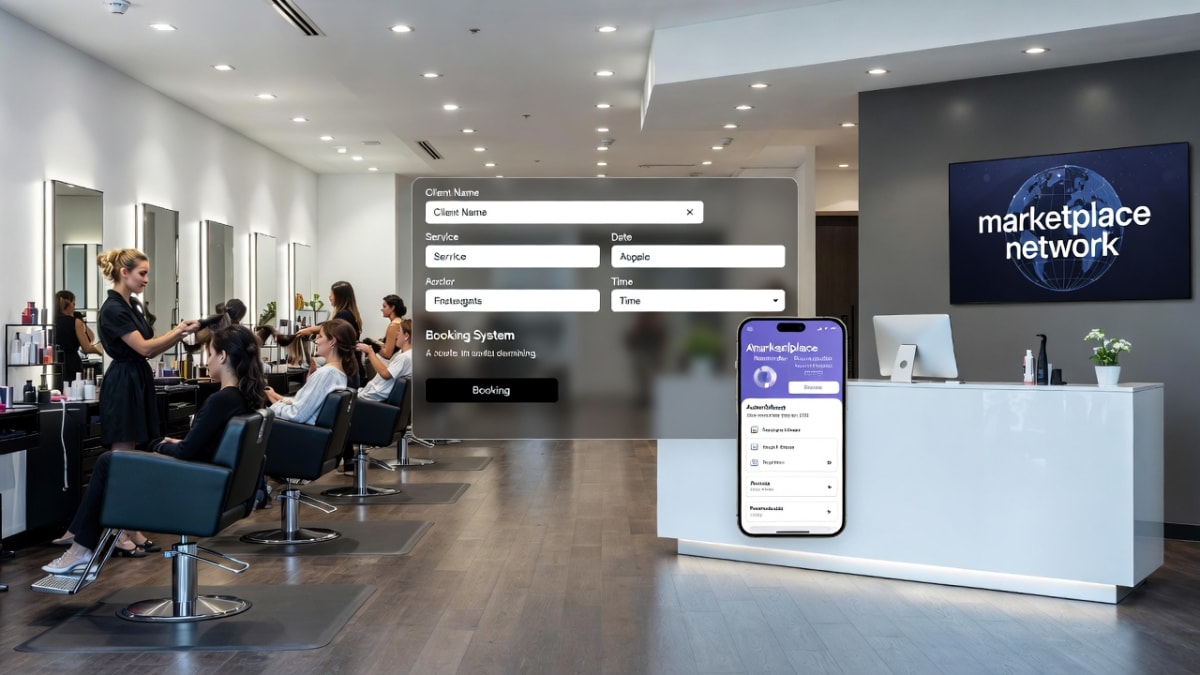
Scaling Your Salon in 2026: From Single Location to Multi-Chair or Marketplace Network
The salon industry is evolving fast in 2026. The U.S. hair salon market alone is valued at around $60 billion, with the broader beauty and salon services sector projected to grow steadily at 6 - 8% CAGR through the next decade. Independent salons face rising costs (rent, staffing, supplies), labor challenges, and client expectations for 24/7 convenience and personalization. Many owners are hitting a ceiling: one location maxes out at 4 - 10 chairs, limited walk-ins, and owner-dependent operations.
The smart move? Scale intentionally - either by expanding to multi-chair/multi-location setups (more control, higher revenue potential) or joining/leveraging a marketplace network (faster client acquisition, lower marketing spend, shared tech).
This guide breaks down both paths with realistic steps, pros/cons, key decisions for 2026, and how modern booking platforms make scaling smoother and more profitable.
Why is now the right time to scale your salon in 2026?
- Client behavior: ~40 - 46% of bookings happen outside business hours; clients expect seamless online discovery, instant availability, and no friction.
- Competition: Chains and marketplaces (like Vagaro, Fresha, Booksy ecosystems) capture visibility; independents without digital reach lose ground.
- Profit pressures: No-shows (10 - 20% average), staffing turnover, and rising overheads squeeze margins. Scaling spreads fixed costs and boosts average revenue per location/chair.
- Opportunity: Multi-location and marketplace models are accelerating - salons using centralized tech and broader exposure report faster growth, better retention (60 - 75% pre-booking rates), and more predictable income.
Scaling isn't about "getting bigger" - it's about building a system that works without you in every chair.
Path 1: How do salons scale to multiple chairs or locations while keeping control?
Grow by adding chairs in your current space or opening new locations. Ideal if you want full branding, pricing control, and team culture.
Pros:
- Higher revenue ceiling (double/triple chairs = exponential income potential).
- Build a recognizable brand and loyal team.
- Keep all profits (no marketplace commissions).
- Easier to implement consistent standards and upsells.
Cons:
- Higher upfront costs (buildout, equipment, rent).
- More management complexity (staff hiring, scheduling across locations).
- Slower client growth without strong marketing.
What is the step-by-step process for scaling a salon successfully in 2026?
- Maximize your current location first
- Aim for 75 - 85% chair utilization (industry benchmark for profitability). Add 1 - 2 chairs if space allows - focus on high-demand services and pre-booking (target 60 - 75% rebooking rate).
- Choose your model
- Commission: You pay staf
- Invest in scalable tech
- Use a booking system with multi-location dashboards (real-time revenue, staff performance, inventory across sites). Features like centralized calendars, automated reminders (reduce no-shows 40%+), and analytics are non-negotiable.
- Hire & train smart
- Start with one strong lead stylist/manager per new location. Use micro-education (short trainings) to maintain standards. Offer incentives for retention (loyalty bonuses, priority scheduling).
- Marketing for growth
- Local SEO + Google Business profiles for each location. Run targeted ads for "salon near me" and use waitlists to fill gaps fast.
Timeline & Math Example: Adding 2 chairs to a $10K/month salon (at $75 avg ticket, 75% utilization) can add ~$4,500 - $6,000/month revenue. Opening a second location doubles that potential within 12 - 18 months if systems are solid.
Path 2: How does the marketplace network model help salons grow faster with less risk?
Join or build visibility in a directory/marketplace platform - clients discover you through search, compare services, and book instantly.
Pros:
- Instant exposure to new clients (marketplaces drive steady leads without heavy ad spend).
- Lower marketing costs (platform handles discovery).
- Built-in tools (24/7 booking, reminders, payments, waitlists).
- Faster scaling - add "virtual chairs" via more visibility instead of physical space.
Cons:
- Commission fees on new bookings (typically 10 - 20%).
- Less brand control (clients find you via platform).
- Competition from other listed salons.
What are the steps for leveraging a salon marketplace to accelerate growth?
- Choose the right platform
- Look for ones with strong local reach, low fees, and multi-salon tools (e.g., centralized management if you expand later).
- Optimize your profile
- High-quality photos, detailed services, real reviews, competitive pricing. Highlight unique offerings (e.g., eco-friendly products, specialized treatments).
- Integrate fully
- Enable 24/7 self-scheduling, automated reminders (cut no-shows 30 - 60%), and waitlists to fill last-minute slots.
- Drive internal growth
- Use platform data (peak times, popular services) to adjust staffing and promotions. Encourage rebooking via loyalty perks.
- Hybrid approach
- Use marketplace for new clients + your own website/booking for repeats (best of both worlds).
Timeline & Math Example: Salons on strong marketplaces report 20 - 50%+ new client growth in first 6 months. If 30% of bookings come via platform at $75 avg, that's thousands in added monthly revenue with minimal extra effort
Which scaling path is right for your salon in 2026?
- Choose multi-chair/location if: You have strong local brand loyalty, want full control, and can invest in buildout/staff.
- Choose marketplace network if: You're independent, want faster client acquisition, lower risk, and tech to handle growth without chaos.
- Best of both: Start with marketplace visibility → use new revenue to fund physical expansion.
What is the final checklist for scaling your salon without getting overwhelmed?
- Audit current utilization & no-show rate.
- Upgrade to scalable booking tech (multi-location support, automation).
- Set clear KPIs: revenue per chair/location, pre-booking %, client retention.
- Test one growth lever (add chairs or join marketplace) for 3 - 6 months.
- Track weekly - adjust based on real data.
At The Local Gem, our marketplace booking system is built exactly for this: effortless discovery for new clients, 24/7 scheduling, smart reminders to fill chairs, waitlists to capture last-minute bookings, and analytics to guide your expansion decisions. Whether you're adding chairs or going multi-location, we help you scale smarter.
Ready to grow your salon in 2026? Explore our free trial or message us , we'd love to map out your next steps.
What's your current setup (single location, chairs rented, etc.)? Share in the comments , happy to give tailored advice!