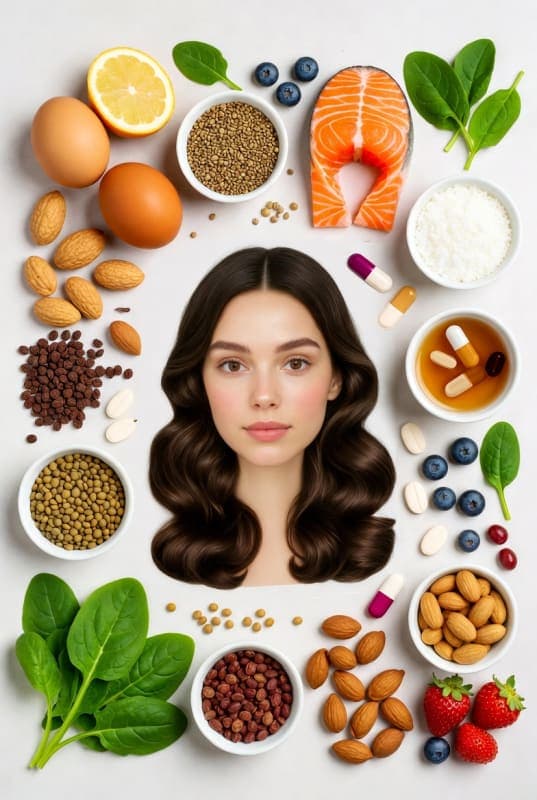
Nutrition for Hair Growth: The Best Foods, Supplements, and Deficiencies Most Women Face
Healthy, vibrant hair starts with what’s on your plate. While genetics, hormones, and styling habits play big roles in hair health, nutrition is one of the most powerful factors you can control. Research shows that certain nutrient deficiencies are linked to hair thinning, shedding, and slow growth and women are particularly prone to several of them due to menstruation, pregnancy, dieting, and hormonal changes.
By age 50, many women notice slower growth or increased shedding, but targeted nutrition can make a real difference. Studies (including large reviews in Dermatology and Therapy and Journal of Cosmetic Dermatology as of 2025) consistently link adequate protein, iron, zinc, vitamin D, biotin, and omega-3s to healthier hair cycles and reduced loss.
Below, we’ll cover the key nutrients, the best food sources, evidence-backed supplements, and the deficiencies most common in women.
Top Nutrients for Hair Growth & Strength
- Protein
- Hair is almost entirely made of keratin, a protein. Low intake leads to weak, brittle strands and increased shedding.
- Daily need: 46–60g for most women (more if active or pregnant).
- Best foods: Eggs, chicken, fish (salmon, tuna), lentils, Greek yogurt, quinoa, nuts.
- Iron
- The #1 nutrient deficiency linked to hair loss in women. Low ferritin (stored iron) disrupts the hair growth cycle.
- Most women affected: Up to 20–30% of premenopausal women have low iron stores.
- Best foods: Red meat, spinach, lentils, pumpkin seeds, fortified cereals. Pair plant sources with vitamin C (e.g., bell peppers, citrus) for better absorption.
- Zinc
- Essential for hair tissue growth and repair. Deficiency causes thinning and scalp issues.
- Common in women: Vegetarians, vegans, and those with heavy periods.
- Best foods: Oysters, beef, chickpeas, pumpkin seeds, cashews.
- Biotin (Vitamin B7)
- Supports keratin production. Severe deficiency is rare, but marginal levels may slow growth.
- Best foods: Eggs, almonds, sweet potatoes, avocados, salmon.
- Vitamin D
- Receptors in hair follicles need it for new follicle formation. Low levels correlate with alopecia areata and thinning.
- Most women deficient: Up to 70% globally, especially in winter or with limited sun exposure.
- Best foods: Fatty fish, fortified milk/orange juice, egg yolks. Sun exposure helps too.
- Omega-3 Fatty Acids
- Reduce inflammation and nourish scalp. Linked to shinier, thicker hair.
- Best foods: Salmon, mackerel, walnuts, chia seeds, flaxseeds.
- Collagen
- Provides amino acids for keratin. Emerging research shows benefits for hair thickness and reduced breakage.
- Best foods: Bone broth, chicken skin, fish with skin. Supplemental collagen peptides are popular.
- Vitamin C & E
- Antioxidants that protect follicles and aid iron absorption (C) and scalp circulation (E).
- Best foods: Citrus, berries, kiwi (C); almonds, sunflower seeds, spinach (E).
Common Deficiencies in Women & How to Spot Them
- Iron/Ferritin: Heavy periods, vegetarian diets → fatigue, pale skin, thinning hair. Get a blood test.
- Vitamin D: Indoor lifestyles, darker skin tones → hair loss, low mood.
- Zinc: Poor absorption from plant-heavy diets → brittle hair, white spots on nails.
- Protein: Crash dieting, vegan without planning → dry, slow-growing hair.
Should You Take Supplements?
Supplements help when diet falls short or deficiency is confirmed but food-first is always best.
- Biotin: 5,000–10,000 mcg popular for hair; evidence is mixed unless deficient. Safe and affordable.
- Marine Collagen Peptides: 5–10g daily; studies show improved hair thickness in women after 3–6 months.
- Iron: Only if blood tests show low ferritin (common threshold <30–50 ng/mL for hair health). Take with vitamin C.
- Multivitamin with Zinc + Vitamin D: Good insurance if diet is inconsistent.
- Omega-3 (Fish Oil or Algae Oil): 1–2g EPA/DHA daily for anti-inflammatory benefits.
Always check with a doctor before starting, especially if pregnant or on medications.
Quick Daily Meal Ideas for Hair Health
- Breakfast: Greek yogurt with berries, chia seeds, and almonds.
- Lunch: Spinach salad with grilled salmon, chickpeas, bell peppers.
- Snack: Hard-boiled eggs or carrot sticks with hummus.
- Dinner: Lentil curry with quinoa and broccoli.
Final Thoughts
Consistency matters more than perfection. Small upgrades like adding spinach to smoothies or taking a daily collagen peptide can add up over 3–6 months (the average hair growth cycle). Combine good nutrition with gentle hair care, stress management, and adequate sleep for the best results.
You deserve strong, healthy hair at every stage of life. Start with one change today your follicles will thank you.
What’s one hair-boosting food you’ll add to your plate this week?
Find Your Perfect Beauty Pro
The Local Gem connects you with top-rated, verified beauty professionals in DFW. Real reviews, real prices, real results.
Find Hair Stylists Near You